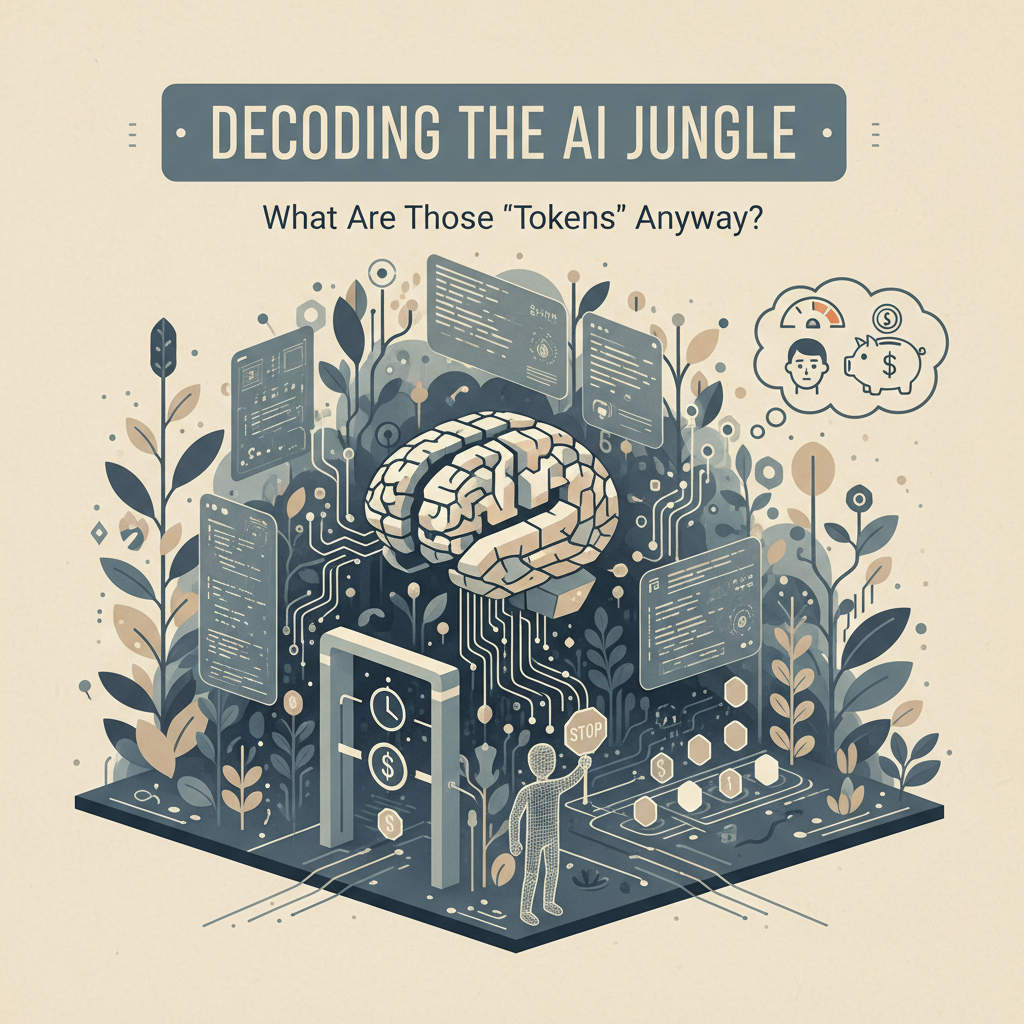
Hey there, AI enthusiasts! 👋
If you’ve been playing around with cutting-edge chatbots like Anthropic’s Claude, you might feel like you just stumbled into a sophisticated digital magic trick. Claude is brilliant—it writes poetry, helps you structure a resume, and can probably plan your perfect week-long trip to Patagonia. 🤩 But then, BAM! Suddenly you hit a wall. You get a little message blinking at you, like a digital bouncer saying, “Hold up, buddy.”
What gives? Are they secretly running out of electricity? Are they timing us? 🤔
The source material dive was deep, but I’ve taken that dense technical jargon and distilled it into something you can actually understand while sipping your latte. Let’s talk about the invisible rules of AI—specifically, the tricky topic of rate limits and ‘tokens.’ Spoiler alert: it’s not nearly as scary as it sounds!
🚦 The Invisible Handshake: Why Limits Exist
First off, let’s keep it real: Large Language Models (LLMs) are ridiculously expensive to run. When you type a prompt, Claude isn’t just “thinking”—it’s performing what’s called inference. Think of inference as the computer having to do a massive, instant calculation based on everything it’s ever “read.” That takes serious computing power, and that power costs the company real money. 💸
Because of this, Anthropic (and every other AI company) has to put a leash on usage. They can’t let hyper-engaged users spend a fortune in a single afternoon! 🤷♀️
These limits are designed to ensure “fair access to all users.” Basically, they are the digital guardrails keeping the playground fun and sustainable for everyone.
🪙 The Operating Currency: Tokens
If the rate limit is the traffic cop, the token is the currency. 💰
Forget thinking of words; think of tokens as the digital gasoline that powers the chat. When you type a question, Claude breaks it down into tokens (which can be words, parts of words, or even punctuation). This means that a super long, winding question uses more “gas” upfront, and the answer it generates also uses a ton of “gas” to write itself. ⚡
The Golden Rule: Keep your prompts concise and clear! Don’t ask the AI to do the heavy lifting with a meandering novel—save those tokens for the good stuff.
📖 Free Tier Tips for Smooth Sailing
Since the limits are a bit of a mystery (Anthropic keeps their exact numbers locked up tight!), here are a few insider tips for maximizing your free usage:
- Know your models: The free tier typically gives you access to models like Sonnet and Haiku. They are fantastic workhorses! 💪
- Watch the Effort Menu: Claude often has an “Effort” setting (Low, Medium, High). Higher effort means a more thoughtful response, but it will burn through your tokens faster. Use it when you really need that deep dive! 🧐
- The Context Window: This is Claude’s digital short-term memory. Don’t try to paste an entire encyclopedia article into one chat. The limit means the AI can only “remember” so much in one conversation thread.
💡 Bottom Line Takeaway
Don’t get bogged down in the technical details until you’re ready to deploy an AI model for a paid enterprise solution. For the average user, just remember that AI power is precious, and clarity is king. Be crisp, be concise, and keep those tokens flowing! ✨
Go forth, chat away, and don’t let a little rate limit throw you off your game! 😉
📚 Further Reading & Research
- Understanding AI Computing Costs: For a deeper dive into why compute power makes LLMs expensive, check out resources like the Google Cloud Blog on LLM Economics [Example Link: cloud.google.com/ai-costs].
- What are Tokens? The official documentation from OpenAI or Anthropic often provides excellent beginner guides on tokenization, which explains how these models “read” and “write” digital information.
- AI Ethics & Usage Limits: Many academic papers discuss the necessity of throttling and usage limits to prevent misuse and manage global resource consumption in AI. [Example Link: researchgate.net/AI-Usage-Ethics].
Leave a Reply