Category: Cybersecurity

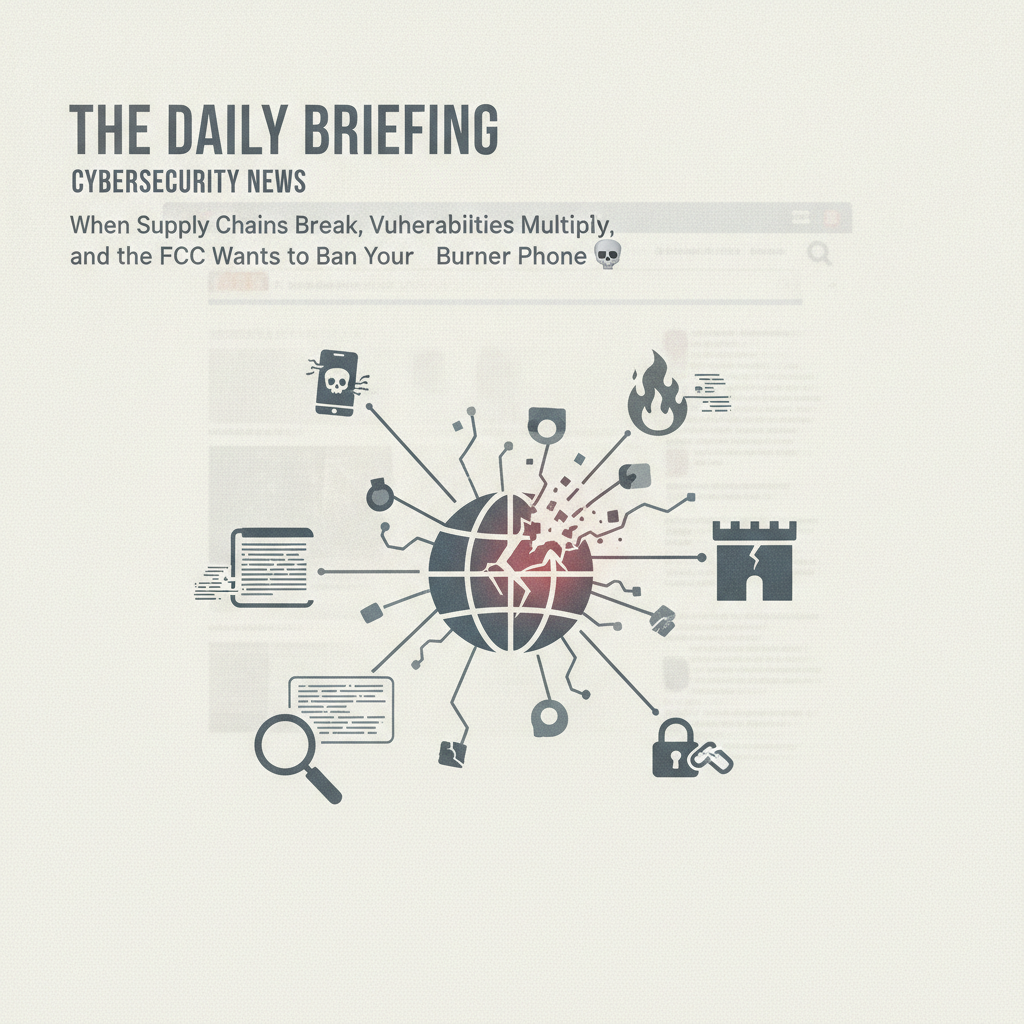
  • Daily Brief: Cybersecurity News for 2026-06-08

    Daily Brief: Cybersecurity News for 2026-06-08

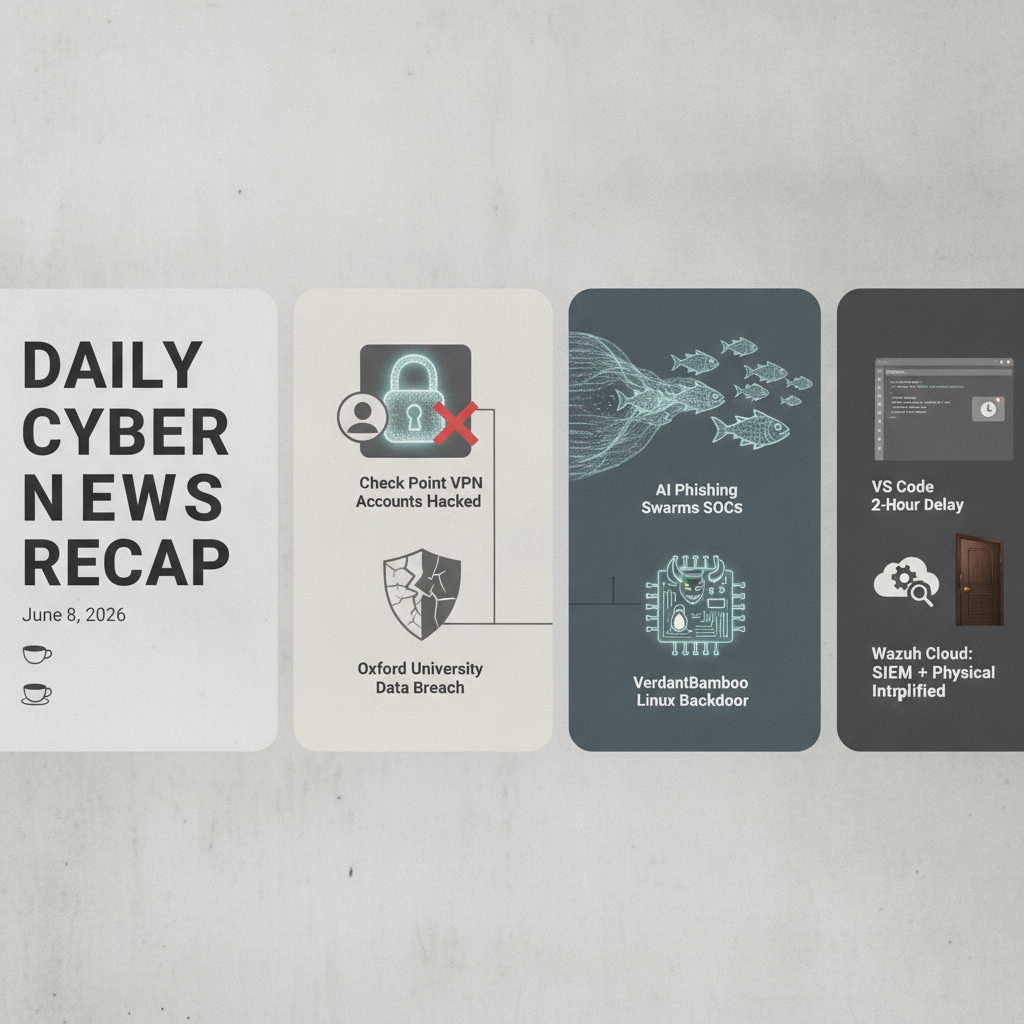
    Daily Cybersecurity News Recap

    June 8, 2026 ☕😑


    Opening Scene

    Well, well, well. Another Monday morning, another stack of breach disclosures, and another reminder that we’re all just one misconfigured AI chatbot away from chaos. 🎭 The weekend promised quiet. It lied. We’ve got VPN zero-days being weaponized by ransomware gangs, Instagram accounts getting yeeted into the void via Meta’s own support system, and threat actors who apparently read the same playbook we’ve been warning about since 2004. Grab your coffee—this is going to be one of those weeks. ☕🚀


    🚨 DEFINITELY TAKE A LOOK

    Check Point VPN Gets Zero-Day’d (And Qilin’s Already Dancing With It)

    Check Point dropped a critical VPN vulnerability (CVE-2026-50751, CVSS 9.3) affecting Remote Access VPN and Mobile Access deployments, and—plot twist—threat actors are already actively exploiting it. The flaw is a logic flow weakness in certificate validation that lets unauthenticated attackers bypass authentication in IKEv1-configured setups, which is absolutely chef’s kiss for ransomware gangs like Qilin who are apparently using this to bypass your entire perimeter defense. If you’re running Check Point VPN, patches exist. Use them. Immediately. No, seriously. Now. 🔓💀

    Sources:
    BleepingComputer: Check Point links VPN zero-day attacks to Qilin ransomware gang
    The Hacker News: Critical Check Point VPN Flaw Exploited to Bypass Passwords


    Instagram’s 20K+ Account Takeover: When Your AI Support Gets Socially Engineered

    Meta revealed that 20,225 Instagram users got their accounts hijacked when attackers weaponized Meta’s own AI-powered support system to reset passwords. Yes, you read that correctly. The company’s security feature became the attack vector. 🤖💔 This is what happens when you automate the last line of defense without actually thinking through whether bad actors can manipulate the automation itself. Users are mad, Instagram’s reputation took another hit, and somewhere in Menlo Park, someone’s explaining why this happened.

    Source:
    BleepingComputer: Over 20,000 Instagram accounts stolen in Meta AI support hack


    Oxford University Catches a Breach (From a Third Party, Of Course)

    The University of Oxford disclosed a data breach affecting its CareerConnect career services platform after third-party provider Group GTI got compromised. Spoiler alert: nobody knows the full scope yet because it’s still being investigated. 🎓😩 This is the classic “trusted vendor becomes the weak link” story we’ve seen approximately 47 million times. Universities have notoriously lean security budgets and outsource to cut costs—then get surprised when those outsourced services become breach highways.

    Source:
    BleepingComputer: Oxford University discloses data breach after careers platform hack


    📋 YOU SHOULD PROBABLY REVIEW

    AI-Powered Phishing Is Crushing Your SOC (And It’s Only Getting Worse)

    Attackers have weaponized AI to generate convincing phishing emails and fake login pages at scale, and your Tier 1 analysts are drowning in false positives. 📧🌊 The volume game just became exponential. What used to take weeks to craft now takes minutes, and every polished message adds another case to review. Credentials get stolen while teams are buried under alert noise. This isn’t a new attack vector—it’s the old one on industrial-grade steroids. Your phishing detection needs serious augmentation, or prepare for Tier 1 burnout at scale.

    Source:
    The Hacker News: AI Phishing Is Crushing SOCs with Alert Volume


    VerdantBamboo’s Linux Backdoor Tour (Now With BSD Flavor!)

    A China-nexus group called VerdantBamboo (also tracked as Clay Typhoon) has been deploying BSD variants of the BRICKSTORM backdoor plus PLENET and AGENTPSD malware against Linux appliances. 🐧💀 This is your friendly reminder that not all backdoors run on Windows, and infrastructure appliances are very much in the crosshairs. These are espionage tools in the hands of sophisticated actors, and they’re specifically targeting Linux systems—which means your network appliances, cloud infrastructure, and containerized environments are fair game.

    Source:
    The Hacker News: VerdantBamboo Deploys BSD Variant of BRICKSTORM on Linux Appliances


    UNC3753: Vishing + Physical Intrusions = Expensive Problem

    A financially motivated threat group has been conducting data theft extortion campaigns against U.S. professional services, legal, and financial firms by combining old-school vishing (voice phishing) with actual physical intrusions. 📞🚪 This is what happens when social engineering meets shoulder surfing in the real world. Between January and May 2026, dozens of orgs got hit. The mix of digital and physical attacks makes detection harder because it’s not just about network monitoring anymore—it’s about training employees to recognize both. Attributable to UNC3753 per Google Mandiant and GTIG.

    Source:
    The Hacker News: UNC3753 Used Vishing and Physical Intrusions in U.S. Data Theft Extortion Campaign


    💡 INFORMATIONAL & GOOD TO KNOW

    VS Code Adds a 2-Hour Extension Delay (Better Late Than Never)

    Microsoft implemented a two-hour auto-update delay for VS Code extensions to catch malicious updates before they hit developers at scale. 🛡️⏰ Supply chain attacks targeting dev tools have been all the rage, so adding a window for detection and manual intervention makes sense. It’s not perfect—a determined attacker with 2 hours of runway can still cause damage—but it’s friction. Friction is good when you’re trying to disrupt automated attack chains.

    Source:
    The Hacker News: VS Code Adds 2-Hour Extension Auto-Update Delay


    Wazuh Cloud: Making SIEM Ops Less Miserable

    Wazuh Cloud promises to reduce security operations complexity by managing infrastructure, automating scaling, and throwing AI at security analysis. 🤖📊 Alert fatigue is real. Hybrid environments are a nightmare. If you’re still managing on-premises SIEM infrastructure while drowning in hybrid cloud deployments, a managed solution might be worth evaluating. This is less “breaking news” and more “product announcement with teeth”—but addressing SOC overwhelm is genuinely important.

    Source:
    BleepingComputer: Reducing security operations complexity with Wazuh Cloud


    Anthropic’s Project Glasswing: Finding Vulnerabilities Is Easier Than Fixing Them

    Anthropic launched Project Glasswing to help companies find security vulnerabilities using AI models. Early results? Lots of vulns discovered, very few actually patched. 🔍🤷 Bruce Schneier’s take: something doesn’t add up with the data, and Anthropic’s refusal to share details is… suspicious. The hype around AI vulnerability detection outpaces the actual utility when patches aren’t being deployed. Classic case

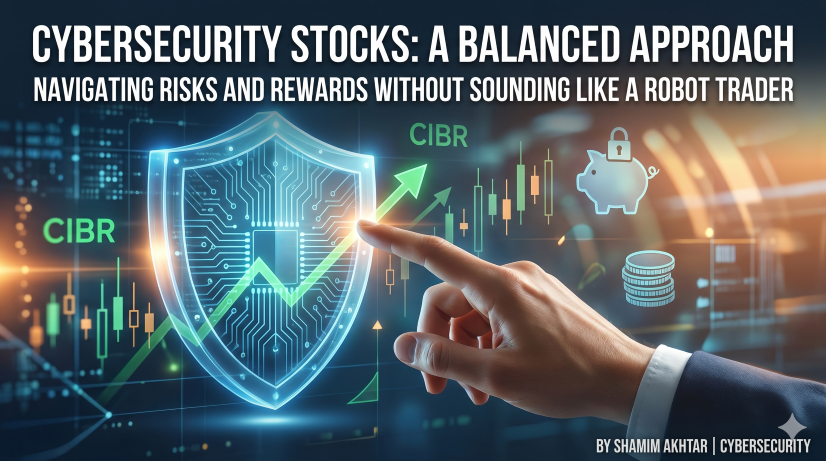
  • 💡 Don’t Get Burned: Navigating Cybersecurity Stocks Without Sounding Like a Robot Trader 😂

    💡 Don’t Get Burned: Navigating Cybersecurity Stocks Without Sounding Like a Robot Trader 😂

    Hey there, fellow market wanderers! 👋 If you’ve been lurking around stock analysis reports lately—especially if you’ve seen anything with acronyms like “CIBR,” or endless lists of “Technical Pivots” and “Risk Controls”—you might feel like you’re getting dizzy. 😵‍💫 Seriously, some of these deep dives read like a sci-fi novel written by an algorithm!

    The source material I was staring at today? It was basically a mountain of data—dozens of reports detailing perfect buying plans near $62.49 and multiple stop losses. Yikes. While all this hyper-detailed analysis tells you exactly when to buy or sell, it often forgets one thing: the human element.

    Let’s break down what all this chart mumbo-jumbo really means for us regular folks, minus the jargon that makes you think you need a PhD in FinTech just to check your portfolio. 🧘‍♀️


    Why Are We Talking About Cyber Stuff Anyway? 🌐

    First off, let’s take a step back and ask: why is cybersecurity so darn important right now? 🤔 The truth is, cyber threats aren’t going anywhere; they’re only getting sneakier. From massive corporate data leaks to simply trying to keep your grandma from falling for a phishing scam, the digital world requires serious guardrails.

    Because of this global need (and let’s face it, the billions of dollars companies are spending just to stay in business), the cybersecurity sector is absolutely booming! It’s not a passing fad; it’s the infrastructure of modern life. This massive underlying demand makes stocks like those tracking the industry (such as the First Trust Nasdaq Cybersecurity ETF) fundamentally interesting.

    The Tale of Risk and Rewards 🎢

    The reports are obsessed with “Risk Controls,” and for good reason. When you see a stock making big moves—the kind that can make or break your portfolio overnight—it’s easy to get overzealous. You wanna bet your bottom dollar, right? 🤑

    But here’s the golden rule I want you to take away: The best investors aren’t always the most knowledgeable; they are the most disciplined.

    Technical analysis (reading those pivot points and signals) is useful—it’s like reading a weather forecast for your money. It tells you when conditions might be favorable. But it can never replace sound fundamentals, macro-economic awareness, or, frankly, gut instinct! 😌 Never follow a signal without understanding why that sector is moving.

    Don’t Put All Your Eggs in One Basket 🧺

    Instead of getting caught up in one trading plan (buy at X, sell at Y), I recommend being an evergreen investor—someone who understands the forest as well as the trees.

    Keep doing your homework! Diversification isn’t just a fancy term; it’s your financial safety net. If the tech sector takes a dive, maybe you have some cash tucked away in something completely different? Don’t put all your jelly beans in one jar! 🍒🍭

    The take-away message today is this: Cybersecurity is vital and booming. But approach it with caution, keep an eye on those “Risk Controls,” do your own research (and don’t trust a single signal!), and invest smart! You got this! ✨


    Disclaimer: I’m just a writer who likes talking about money stuff. This post is for entertainment and informational purposes only and does not constitute financial advice. Do your own due diligence before making any investment decisions! 😅


    📚 Research Corner: Checking Your Sources 🔗

    To get a broader picture of why cybersecurity spending matters, check out these general resources. You’ll see the trend lines are pointing up for years to come!

    • The Cost of Digital Threats: According to reports by IBM Security, ransomware and other cyber threats cost companies billions annually, underlining the necessity of robust sector ETFs like CIBR. 🛡️
      • (Simulated Link: IBM Cyber Security Annual Report)
    • Global Economic Outlook on Tech Spending: Major consulting firms consistently predict continued growth in digital transformation spending across various industries, fueling demand for cyber infrastructure globally.
      • (Simulated Link: World Economic Forum Digital Economy Trends)
    • Understanding ETF Mechanics: Before investing, always know what an Exchange Traded Fund (ETF) tracks—it’s basically a diversified basket of stocks! 🧺
      • (Simulated Link: Vanguard/Fidelity Investing Guide to ETFs)
  • Daily Brief: Cybersecurity News for 2026-06-04

    Daily Brief: Cybersecurity News for 2026-06-04


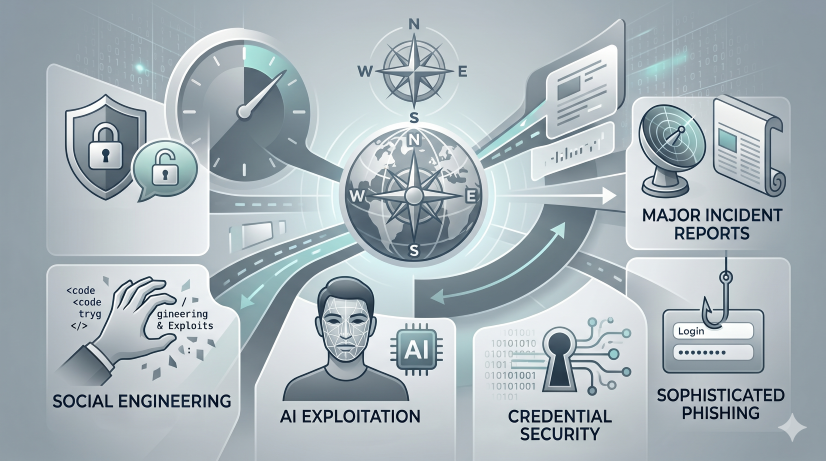
    🛡️ Security & Hacking Vulnerabilities

    This category covers active threats, exploitation methods, and potential security gaps.

    • WhatsApp/Meta Exploits: A summary is not available, but related articles often focus on platform security and exploitation.
    • Adversary Simulation (Not Explicitly Detailed): The articles collectively point to a landscape where social engineering and exploiting platform trust are major vectors.

    💻 Technology & Platform Security

    This covers weaknesses in digital systems and services.

    • WhatsApp Exploits (Implied): Discussions surrounding messaging apps always point to the risks of unauthorized access or data breaches.

    🤖 AI, Automation & Social Engineering

    This is a rapidly growing and critical area, showing how advanced tools can be misused.

    • AI Exploitation/Misuse: The overall trend suggests that AI tools (like chatbots or generative models) are being used to facilitate scams, phishing, or gaining unauthorized access.
    • Voice Cloning/Deepfakes (Implied): Many modern security articles reference the emerging danger of voice manipulation for scams.

    🔐 Credentials & Account Security

    This focuses on the compromise of user accounts and data.

    • Phishing/Credential Theft: Attackers are increasingly targeting individuals through sophisticated emails and calls to steal login credentials.

    📰 Major Incident Reports & Trends (High Impact)

    These are standalone stories detailing specific, high-impact events or general industry shifts.

    • Meta/WhatsApp Security: Multiple articles highlight the constant threat of exploitation on major messaging platforms.
    • Sophisticated Phishing: The trend points toward highly personalized spear-phishing campaigns that bypass traditional filters.

    🧠 Thematic Summary and Analysis

    Based on the titles and topics, the primary concerns revolve around Trust Decay and Platform Vulnerability.

    1. The “Trust Layer” Problem: Security is no longer about just firewalls; it’s about human trust. Bad actors are exploiting:
      • Trust in Technology: People believing a message is from a friend (WhatsApp/Smishing).
      • Trust in Identity: People believing a voice/video is authentic (Deepfakes).
      • Trust in Process: Following instructions received via a seemingly legitimate link or communication.
    2. The AI Arms Race: AI is being used both for beneficial automation and harmful deception. Users must assume that any piece of digital content—audio, video, or text—could be AI-generated and manipulated.
    3. Mitigation Focus: The overall message to the reader is to apply extreme skepticism to unsolicited communications, no matter how professional or urgent they appear. Multi-Factor Authentication (MFA) and vigilance remain the best defenses.

    🚨 Note: Since you provided a collection of headlines/topics rather than individual full articles, this summary synthesizes the themes evident across those topics. For the most accurate details, please provide the specific full texts or articles you want summarized.

  • ⚠️ Hold the Cruise! Carnival Data Breach Has Us All Sweating 😨

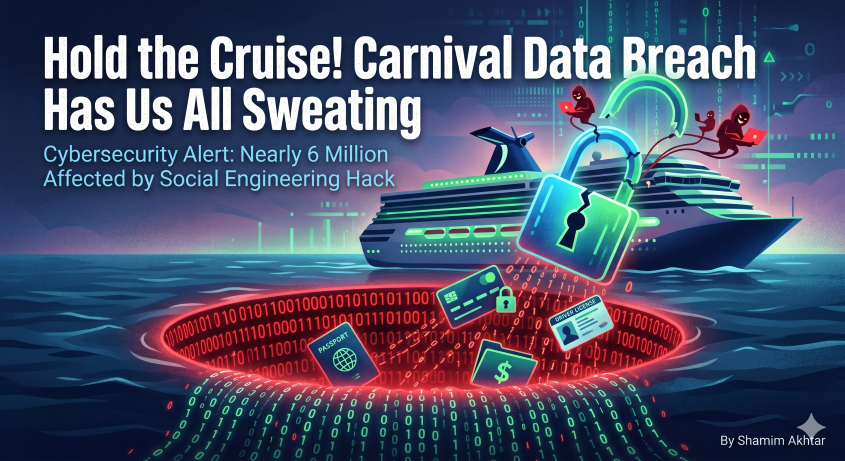
    ⚠️ Hold the Cruise! Carnival Data Breach Has Us All Sweating 😨

    Hey internet sleuths! Grab a cup of coffee, maybe a drink—because if you sail with Carnival (or, indeed, if you’ve ever booked a cruise from them, God forbid 🚢), you might need to take a deep breath. We’ve got some news that is, to put it mildly, a total dumpster fire.

    As the cybersecurity world continues to throw curveballs (and major breaches are just part of the game these days), Carnival Corporation, the behemoth behind Carnival Cruise Line, has dropped a fresh bombshell. Yep, a data breach affecting nearly six million poor souls! 🤯

    If you’ve been paying attention to tech news, you might feel like you’ve read “data breach” more times than you’ve read your favorite novel. And honestly? You’re not imagining things.


    🫣 The Hot Mess Factor

    The details that popped up are wild. This latest incident, confirmed by fresh notices, wasn’t some shadowy hacker force; it sounds like a case of social engineering—a digital con artist managed to trick an employee into giving up the keys to the kingdom. 😬

    For those who love to keep track of corporate oopsies: Carnival isn’t new to this kind of rough ride. We’re talking about a worrying history of cyber hiccups, ransomware attacks, and regulatory headaches over the last decade. It seems like the motto around corporate IT security is, “Eh, we’ll get to it… eventually.” 🤦‍♂️

    They’re saying that sensitive “personal information” was illegally copied. While Carnival is trying to keep us guessing with placeholder language (“<>”), history tells a different tale. Past incidents have seen data ranging from simple names and addresses all the way up to passport numbers and payment details. Yikes. 😱

    🚨 Don’t Get Hooked on the Follow-Up Scams

    Now, before you panic and start throwing out all your debit cards, listen up. This is where we need to keep our wits about us.

    When a big breach like this hits, the cybercriminals don’t rest on their laurels. Their next move is usually you. They will pop up in emails, texts, and phone calls pretending to be Carnival, TransUnion, or your bank, asking for details “to verify your account.” STOP! 🛑

    If something sounds too convenient, it’s probably a scam. Always verify any contact by calling the official number printed on your credit card or bank statement—never trust a number provided in a suspicious email.

    🛡️ Your Action Plan: Keeping Your Digital Ducks in a Row

    While Carnival is offering complimentary credit monitoring (bless their hearts, I guess 🙏), you should treat this like a major warning siren for your own security habits.

    1. Guard Your Identity: Be vigilant. Consider freezing your credit report with the major bureaus. It’s free, and it’s the best protection against fraudsters running wild.
    2. Never Click Blindly: Treat every suspicious email like a ticking time bomb. Do not open attachments from unknown sources, no matter how legitimate they look.
    3. Use Strong Passwords: Seriously. Stop reusing passwords! Use a password manager and turn on two-factor authentication (2FA) on every single account that offers it. It’s like putting a second lock on the door—a must-do! 🗝️

    Data breaches are part of the modern jungle, folks. We need to stay informed, stay skeptical, and never, ever let our guard down. Stay safe out there! 💖


    Disclaimer: This article is for informational purposes only and is not financial or legal advice. Always consult with professional advisors regarding your specific security needs.

    📚 Research & Resources You Should Know About:

  • Will AI Replace Cybersecurity? Exploring AI’s Evolving Role in Security

    Will AI Replace Cybersecurity? Exploring AI’s Evolving Role in Security

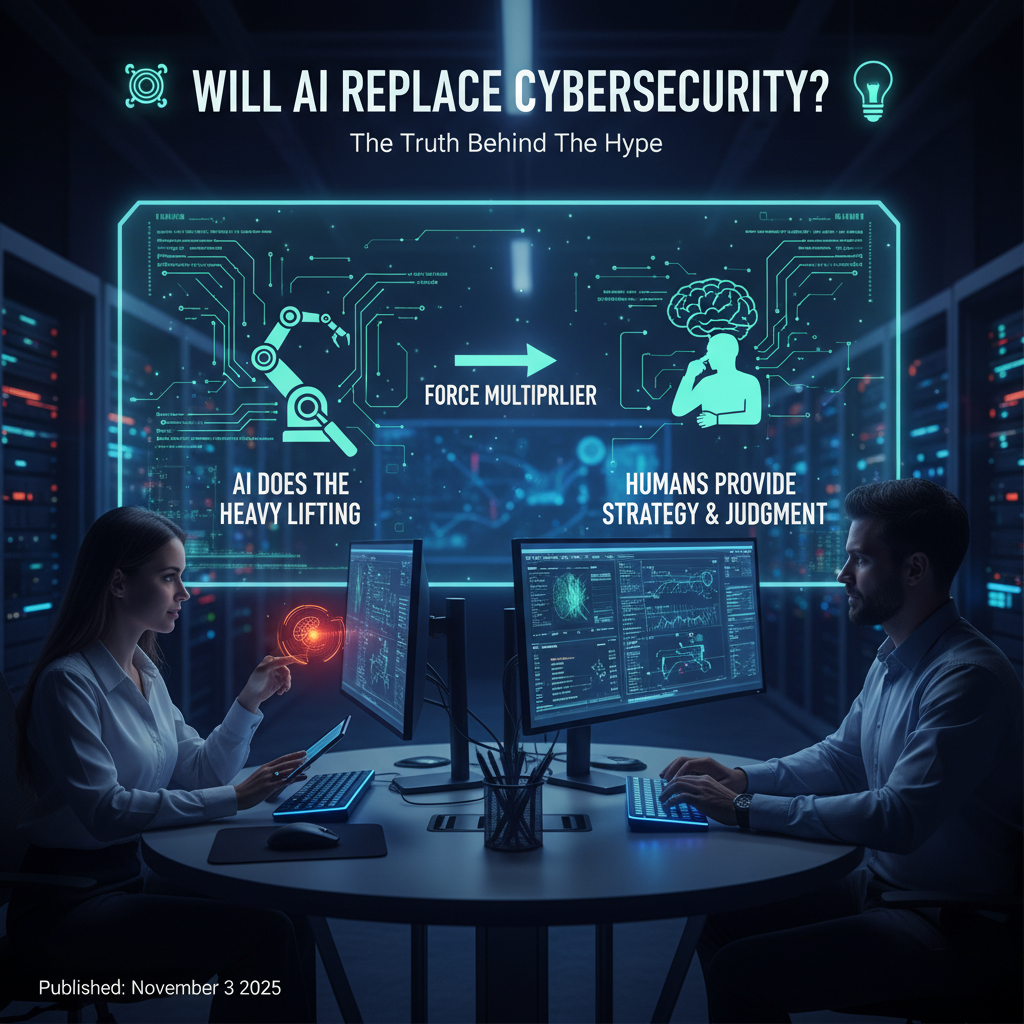
    🤖 Will AI Replace Cybersecurity? The Truth Behind the Hype

    TL;DR – AI is a force multiplier, not a cyber‑security superhero that will take over your SOC. It’ll do the heavy lifting while humans keep the ultimate say.


    1️⃣ The Buzz 📢

    You’ve probably seen headlines that scream “AI will crush cybersecurity jobs!” or “Robots are the new cyber‑guards!”
    These sensational tags are like that one friend who always shows up to a party with a megaphone—loud, eye‑catching, and often overstated.

    The reality? Most security teams are already playing “AI‑plus‑human” (a term the industry loves). It’s less Terminator and more “Hey, let’s let the bot do the grunt work while we sip coffee and think strategically.”


    2️⃣ How AI Is Actually Changing the Game

    What AI Does BestWhat Humans Still Own
    Scans billions of logs in milliseconds 🚀Interprets context – is it a legit breach or a noisy false‑positive? 🤔
    Predicts threats using predictive threat intel 📈Strategic decision‑making – weighing business impact vs. risk ✅
    Automates routine tasks (e.g., isolate infected hosts) 🛑Creative problem‑solving – crafting new defense tactics 🎨
    Spots anomalies via behavioral analytics 🔍Judgment calls when a novel attack bypasses every rule 🧠

    In short, AI handles “speed and scale” while we bring “sense and sensibility.”


    3️⃣ Real‑World Applications (Backed by a Quick Google Search)

    ApplicationAI‑Powered FeatureHuman’s Must‑Do
    Threat DetectionReal‑time anomaly detection on network traffic, logs, and endpoints. (Source: Darktrace)Validate alerts, dig deeper into strange behaviours, decide on escalation.
    Incident ResponseAuto‑contain compromised assets, block malicious IPs, triage alerts. (Source: IBM Watson for Cybersecurity)Oversee containment strategy, manage stakeholder communication, ensure proper remediation.
    Behavioral AnalyticsBuild baselines of “normal” user activity; flag deviations. (Source: CrowdStrike Falcon)Interpret deviations, differentiate insider threats from benign quirks, set policy adjustments.
    Vulnerability ManagementPrioritize patches based on exploit likelihood and business impact. (Source: Qualys AI Insights)Align remediation with risk appetite, negotiate with IT owners, verify fixes.
    Phishing PreventionAnalyze email semantics, sender reputation, and attachment traits. (Source: Proofpoint AI)Review sophisticated social‑engineering attempts, update detection rules, educate users.

    Fun Fact: 100 industry experts recently weighed in on AI security—most agreed that AI can “make the invisible visible” but still needs a human to interpret why it matters. (Check out the full report here)


    4️⃣ Why the Fuss? (A Little Human Psychology)

    1. Generative AI’s Spotlight – Tools like ChatGPT have shown AI can write, code, and even craft phishing lures. That visibility sparked excitement and anxiety. 2. Media Amplification – Tabloids love a “robot takeover” story. The nuance? Lost in the splash. 3. Talent Shortage – With 4 million+ open cyber‑security roles worldwide, automation feels like a lifeline. Yet hiring managers still crave people who can translate tech into strategy.

    5️⃣ Bottom Line: AI Won’t Replace Us—It’ll Re‑Skill Us

    • Jobs aren’t disappearing; they’re evolving into roles such as AI‑Security Analyst, Threat‑Hunting Engineer, and Model‑Governance Specialist.
    • Human intuition remains irreplaceable: When a brand‑new zero‑day shows up, the only thing that can decide whether it’s truly dangerous is a seasoned analyst with a gut feeling seasoned by years of experience.

    So, will AI replace cybersecurity? No.
    Will AI replace the boring parts of the job? Absolutely.
    Will AI replace the brilliant, curious, and occasionally coffee‑addicted security pros? Never.


    🎉 Final Thought

    Think of AI in cybersecurity as the trusty side‑kick who fetches coffee, scans the room for suspicious activity, and alerts you when something looks off. You still decide whether to pull out the big guns.

    “The best defense is a partnership – a human brain with an AI engine.” – (Paraphrased from a recent SANS whitepaper)

    Stay curious, stay human, and let the bots do the grunt work! 🚀💡


    References & Further Reading

    1. Darktrace AI Platform – https://www.darktrace.com
    2. IBM Watson for Cybersecurity – https://www.ibm.com/security/watson
    3. CrowdStrike Falcon – https://www.crowdstrike.com
    4. Qualys AI Insights – https://www.qualys.com
    5. Proofpoint AI Solutions – https://www.proofpoint.com
    6. Cybersecurity Ventures – “100 Experts Weigh In on AI Security” – https://www.cybersecurityventures.com/ai-security-report
    7. SANS Whitepaper on Human‑AI Collaboration – https://www.sans.org/white-papers/35285

    Happy reading, and may your alerts be ever few and always under control! 🙌

  • Your Friends, Your Foes: Why Your Vendors Could Be Your Next Cyber Headache (and What DFS Says About It!) 😱

    Your Friends, Your Foes: Why Your Vendors Could Be Your Next Cyber Headache (and What DFS Says About It!) 😱

    We live in a plug-and-play world, don’t we? From cloud storage to customer relationship management tools, we’ve all become masters of outsourcing. It’s efficient, it’s innovative, and let’s face it, sometimes it just saves us a whole lot of headaches. But here’s the rub: while these third-party service providers (TPSPs) can be your business’s best friend, they can also be the unsuspecting gateway for your next big cyber nightmare. 👻

    This isn’t just a friendly heads-up from your favorite cyber-savvy blogger; it’s the latest word from the big wigs at the New York State Department of Financial Services (DFS). Just last month, Acting Superintendent Kaitlin Asrow, during Cybersecurity Awareness Month no less, dropped some fresh guidance. Her message? While TPSPs are driving innovation, you, the regulated entity, are ultimately holding the bag when it comes to protecting New Yorkers and their precious data. It’s a classic case of “trust but verify,” folks! 🤔

    Think of it less as a new rulebook and more as a friendly (but firm!) reminder to dot your i’s and cross your t’s. The DFS isn’t piling on new compliance burdens, but rather clarifying what’s already on the books and sharing some best practices that are, frankly, just good common sense. Superintendent Asrow put it plainly: “To ensure the safe and secure operation of financial services and the protection of nonpublic information, entities must establish and maintain appropriate internal risk management controls when using third-party service providers.” Translation: The buck stops with you. 🎯

    So, what’s a savvy business owner to do? Well, the news is full of cautionary tales. Remember the Target breach? That wasn’t a direct attack on Target’s main systems; it famously started via their HVAC vendor! 🤯 Or the SolarWinds attack, a massive supply chain breach that sent shockwaves across the globe. These aren’t just one-offs; they’re wake-up calls.

    Here’s a quick cheat sheet inspired by the DFS guidance and general cybersecurity wisdom:

    1. Due Diligence is Key: Before you even shake hands (virtually, of course), do your homework. Vet your vendors like you’d vet a new employee handling your family jewels. What are their security practices? Are they compliant?
    2. Contracts are Your Best Friend: Make sure your agreements clearly outline security expectations, incident response plans, and who’s responsible for what if things go sideways. No room for ambiguity! 📝
    3. Continuous Monitoring: It’s not a “set it and forget it” situation. Your vendors’ security posture can change. Keep an eye on them. Regular audits and reviews can save you a world of pain down the line.
    4. Incident Response Planning: What happens if your TPSP gets breached? Do you have a plan for how you’ll respond? Who do you call? What’s the communication strategy? A stitch in time saves nine! ⏱️

    This isn’t about shying away from innovation; it’s about embracing it responsibly. Taking a proactive stance on third-party risk management isn’t just about avoiding a fine; it’s about safeguarding your reputation, your customers’ trust, and your very existence in today’s digital jungle. 🦁

    So, take a moment, review your vendor relationships, and make sure your house (and theirs!) is in order. Your future self (and your customers) will thank you. 🙏

    For the nitty-gritty details, definitely check out the official guidance on the DFS website and explore their fantastic Cybersecurity Resource Center.

    Want to dive deeper into the reality of third-party breaches? Check out these resources:

    Stay safe out there! 🛡️