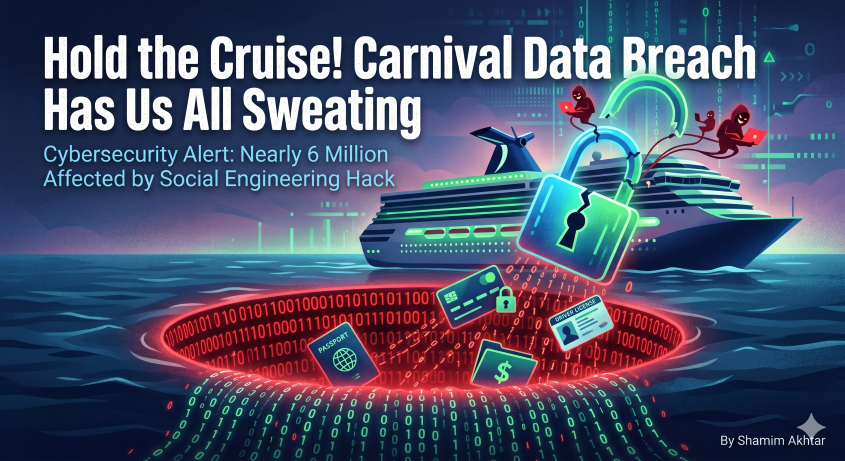
Hey internet sleuths! Grab a cup of coffee, maybe a drink—because if you sail with Carnival (or, indeed, if you’ve ever booked a cruise from them, God forbid 🚢), you might need to take a deep breath. We’ve got some news that is, to put it mildly, a total dumpster fire.
As the cybersecurity world continues to throw curveballs (and major breaches are just part of the game these days), Carnival Corporation, the behemoth behind Carnival Cruise Line, has dropped a fresh bombshell. Yep, a data breach affecting nearly six million poor souls! 🤯
If you’ve been paying attention to tech news, you might feel like you’ve read “data breach” more times than you’ve read your favorite novel. And honestly? You’re not imagining things.
🫣 The Hot Mess Factor
The details that popped up are wild. This latest incident, confirmed by fresh notices, wasn’t some shadowy hacker force; it sounds like a case of social engineering—a digital con artist managed to trick an employee into giving up the keys to the kingdom. 😬
For those who love to keep track of corporate oopsies: Carnival isn’t new to this kind of rough ride. We’re talking about a worrying history of cyber hiccups, ransomware attacks, and regulatory headaches over the last decade. It seems like the motto around corporate IT security is, “Eh, we’ll get to it… eventually.” 🤦♂️
They’re saying that sensitive “personal information” was illegally copied. While Carnival is trying to keep us guessing with placeholder language (“<>”), history tells a different tale. Past incidents have seen data ranging from simple names and addresses all the way up to passport numbers and payment details. Yikes. 😱
🚨 Don’t Get Hooked on the Follow-Up Scams
Now, before you panic and start throwing out all your debit cards, listen up. This is where we need to keep our wits about us.
When a big breach like this hits, the cybercriminals don’t rest on their laurels. Their next move is usually you. They will pop up in emails, texts, and phone calls pretending to be Carnival, TransUnion, or your bank, asking for details “to verify your account.” STOP! 🛑
If something sounds too convenient, it’s probably a scam. Always verify any contact by calling the official number printed on your credit card or bank statement—never trust a number provided in a suspicious email.
🛡️ Your Action Plan: Keeping Your Digital Ducks in a Row
While Carnival is offering complimentary credit monitoring (bless their hearts, I guess 🙏), you should treat this like a major warning siren for your own security habits.
- Guard Your Identity: Be vigilant. Consider freezing your credit report with the major bureaus. It’s free, and it’s the best protection against fraudsters running wild.
- Never Click Blindly: Treat every suspicious email like a ticking time bomb. Do not open attachments from unknown sources, no matter how legitimate they look.
- Use Strong Passwords: Seriously. Stop reusing passwords! Use a password manager and turn on two-factor authentication (2FA) on every single account that offers it. It’s like putting a second lock on the door—a must-do! 🗝️
Data breaches are part of the modern jungle, folks. We need to stay informed, stay skeptical, and never, ever let our guard down. Stay safe out there! 💖
Disclaimer: This article is for informational purposes only and is not financial or legal advice. Always consult with professional advisors regarding your specific security needs.
📚 Research & Resources You Should Know About:
- Identity Theft Protection: For more robust advice on mitigating financial fraud, check resources like the Federal Trade Commission (FTC). Source: FTC Identity Theft Prevention
- Cybersecurity Best Practices: To learn how to spot phishing attempts and general digital hygiene, reputable sources like CISA provide excellent guides. Source: CISA Cybersecurity Tips
- Credit Monitoring: Understanding how credit freezes work is crucial before a breach can be exploited. Source: Equifax/TransUnion Guides
Leave a Reply